
Defence & emerging technologies

No longer a specialist procurement market away from the rest of the economy, defence is increasingly being used as a demand signal, capability accelerator, and industrial growth lever – especially where national security, advanced manufacturing, supply-chain resilience, and dual-use technologies overlap.
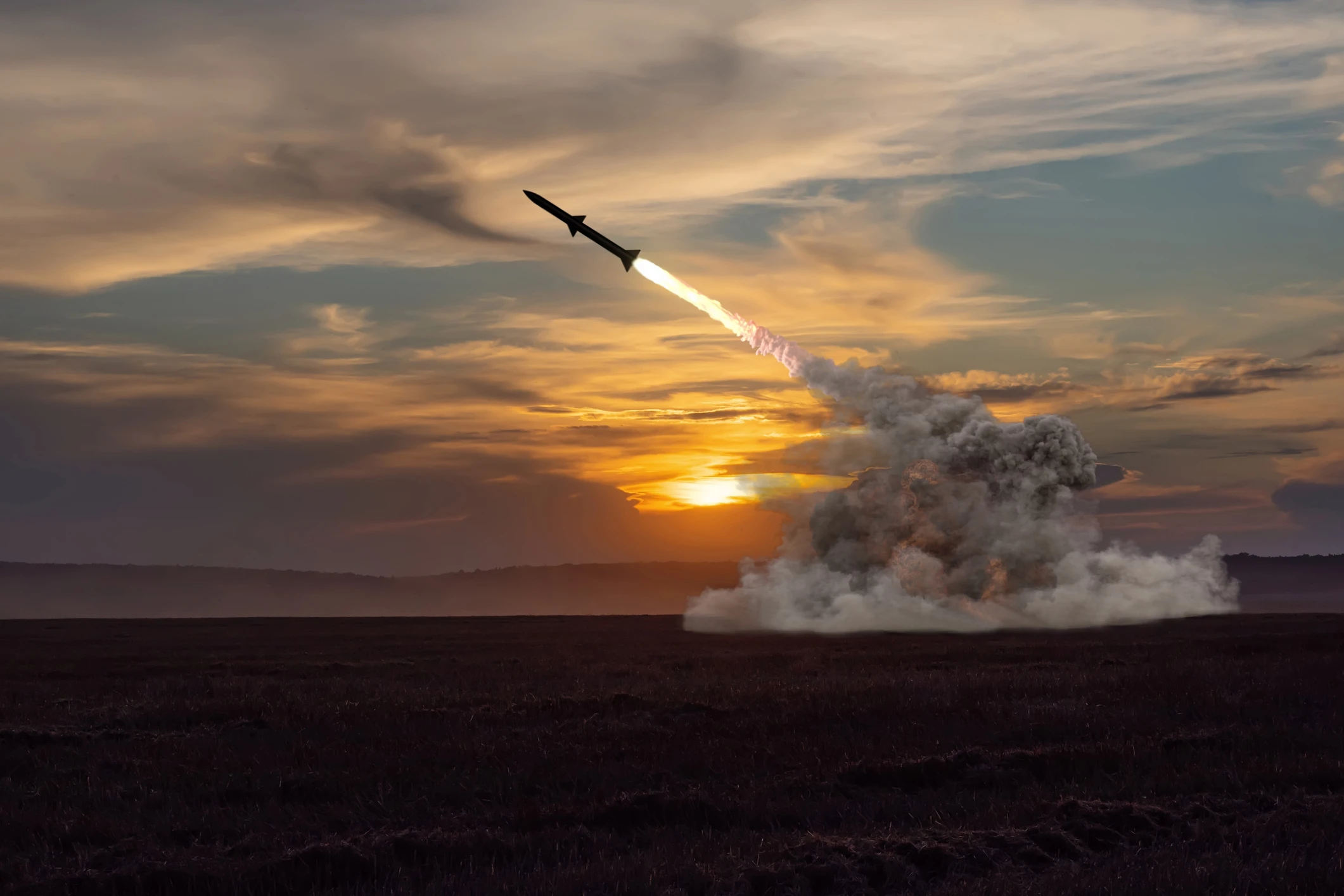
Rocket launch against the background of the evening field, the setting sun

The importance of defence and emerging technologies

Many of the technologies now shaping the future of defence are also relevant to civil industry. Additive manufacturing, robotics, AI-enabled inspection, advanced sensors, autonomy, digital twins, secure data environments, high-temperature materials, advanced propulsion systems, and resilient electronics all have uses beyond defence. 

Within the Future Skills Hub, this theme therefore sits alongside Advanced & smart materials under the banner of Advanced Production Technologies and National Capability. Its relevance lies not only in defence itself, but in how SMEs can use defence-driven demand to strengthen capability, credibility, and market position.

Apache helicopter

Why it matters now for SMEs

For many SMEs, defence can be transformative. It is a demanding market, but it can also be a sticky one. Once a firm has achieved the right combination of quality, compliance, documentation, traceability, and technical credibility, it may gain access to long-term contracts and to supply chains led by major primes.

That makes defence different from many volume-led industrial markets. It often rewards firms that can own a critical niche, demonstrate reliable performance, and support sustainment over time. For SMEs, the opportunity is not spread evenly. The firms most likely to benefit are the ones that can combine specialist process capability, digital readiness, secure manufacturing, qualification discipline, and a clear role inside higher-value supply chains.

Another important factor is that defence-built capability often transfers well into adjacent markets. The discipline required around quality, compliance, lifecycle support, supply-chain resilience, and secure systems integration can strengthen an SME’s position in sectors such as aerospace, medical technology, marine systems, and other high-integrity engineering fields.

Female Aero Engineer Working On Helicopter In Hangar

Main opportunities for SMEs

Advanced manufacturing for defence

This is a major opportunity. Additive manufacturing, advanced joining, precision machining, near-net-shape processes, and digital twins linked to manufacturing readiness are becoming increasingly important where speed, sustainment, redesign, and sovereign industrial capacity matter.

Emerging technologies

A second opportunity sits in emerging technologies moving from research into practical development and procurement. Robotics, autonomy, AI-enabled inspection, advanced sensing, directed-energy-related technologies, hypersonic materials, and advanced propulsion systems are all changing what defence needs from its industrial base.

Secure and assured manufacturing

Trusted supply chains, traceability, export-controlled production, secure documentation, and cyber-physical security are increasingly part of the offer rather than background conditions. In practice, that is often where conventional engineering capability becomes defence-ready capability.

Defence and emerging technologies are best understood as a set of overlapping capability areas rather than a single market.


Changing policy and markets

The UK is now using defence spending more explicitly to support industrial capability, regional growth, innovation, and supply-chain resilience. For SMEs, that matters because the market signal is stronger and more visible than before. Defence is no longer only a procurement system. It is increasingly also a route through which the UK is trying to strengthen domestic manufacturing, novel technologies, regional clusters, and advanced skills.

This is particularly important for firms with dual-use technologies. Many capabilities relevant to defence also matter in aerospace, energy, transport, advanced materials, and specialist industrial sectors. For SMEs, that means investment in defence-readiness can also strengthen competitiveness in adjacent civil markets.

Priority capability areas

Qualification and assurance engineering

Technical performance is rarely enough on its own. Firms need the ability to produce evidence, qualification packs, audit-ready documentation and controlled processes.

Digital manufacturing

Traceability, structured production data, digital work instructions, and manufacturing data environments are becoming more important as systems become more complex and more tightly controlled.

Secure manufacturing

Cybersecurity, export-control awareness, controlled access, secure document handling, and cyber-physical production discipline matter increasingly in defence-related supply chains.

Commercial defence capability

SMEs need to understand how procurement works, how primes engage with suppliers, how long-term contracts operate, and how IP and risk-sharing frameworks affect growth.

In practice, this means SMEs may need stronger capability in areas such as Cyber Essentials and wider information security, recognised quality standards, supplier accreditation routes such as JOSCAR where relevant, supply-chain mapping, and the commercial ability to work effectively with primes rather than only pursuing direct MOD routes.

Practical steps for SMEs

1. Identify your adjacent capability

Start by asking whether your business already has a process, product, material or digital capability that aligns with defence demand. This could be in coatings, advanced machining, additive repair, sensing, AI-enabled inspection, secure electronics packaging, systems integration, or qualification testing.

2. Identify duel-use potential

Then ask whether that capability can be positioned as dual-use for defence and civil sectors. In many cases this is the smartest route, because it spreads risk and helps justify capability investment.

3. Invest early in qualification, assurance, and traceability

Next, strengthen qualification, assurance, and traceability. In defence, firms are often trusted not just because they are innovative, but because they can show evidence, control, and reliability.

4. Actively use shared infrastructure

Catapult facilities, collaborative R&D schemes, test and evaluation routes, prime-led programmes, and innovation accelerators can all reduce the cost and risk of scaling a capability.

5. Build secure manufacturing capability early

Cybersecurity, export-compliance literacy, controlled documentation, digital thread management, and secure access processes should be seen as capability investments, not only as compliance burdens.

Key support available

The networks which we've listed out below can help SMEs access innovation routes, partnership opportunities, industrialisation support, and clearer pathways into defence-related markets.

Additional useful support includes the Defence Office for Small Business Growth, ADS Group, Make UK Defence, techUK, Regional Defence and Security Clusters, and practical use of the Defence Sourcing Portal and MOD Acquisition Pipeline to track live and future opportunities.

Two Business Colleagues At Desks In Office Working Late On Project Together

Summary

SMEs shouldn't see defence and emerging technologies as just a closed government market.

They are increasingly part of a wider industrial system in which national security demand is helping accelerate advanced manufacturing capability, strengthen supply-chain resilience, and create new routes into higher-value production.

The strongest opportunities are likely to go not to firms that simply claim to be innovative, but to those that can combine specialist process or technology capability with qualification discipline, digital traceability, secure manufacturing, and credible partnerships.

The Future Skills Hub is here to help firms move from general awareness of defence opportunity to practical, credible routes into the market.

Businessman and engineer using computer in factory

Shape the Future Skills Hub

Your expertise and insights are invaluable. If you have content, resources, or feedback to enhance the Future Skills Hub, we want to hear from you! Let’s collaborate and shape the future of engineering and manufacturing.

Get in touch

circular-pattern-rotation