
Enabling and transformational skills

The critical constraint in engineering and manufacturing is increasingly not technology itself, but the organisational capability to adopt and use it effectively. Enabling and transformational skills allow organisations to adapt, innovate, and remain competitive as technologies and markets evolve.

Group of operators control process on product line uses industry 4.0 and digital technology on modern factory

Skills that enable industrial transformation

Across engineering and manufacturing SMEs, several core capability areas are emerging as critical. Read on to find out more about each.

Learning, computer and training business interns in night office with manager, boss and leadership help. Men with technology planning ideas, kpi strategy and marketing innovation vision with mentor

Critical skills transforming industry

Digital and data fluency

Digital and data fluency is increasingly essential across engineering and manufacturing roles.

This includes the ability to:

  • understand digital production systems
  • use data analytics tools
  • interact with automated equipment
  • integrate digital technologies into workflows.

Digital skills and computational thinking are not confined to IT specialists — they are becoming essential across engineering, operations and management roles.

Strategic leadership and change management

Technology adoption is as much an organisational challenge as a technical one.

SME leaders increasingly need to:

  • build clear innovation, technology and market strategies
  • guide teams through operational change
  • manage risks and make ethical decisions related to digitalisation, cybersecurity and data.

Strategic leadership is therefore a critical component of successful industrial transformation.

Systems thinking

Modern engineering and manufacturing systems are highly interconnected.

Changes in one part of the system often affect others, including:

  • supply chains
  • quality systems
  • customer and supplier interfaces
  • workforce roles.

Systems thinking allows firms to understand these relationships and avoid unintended consequences when implementing new technologies.

Collaboration and teamwork

As engineering and manufacturing becomes more digital and interdisciplinary, collaboration across functions becomes essential.

This includes:

  • engineers working with data specialists
  • production teams working with IT systems
  • supply chain partners sharing digital information.

Effective collaboration improves innovation, productivity and resilience.

Learning agility and continuous improvement

In a rapidly evolving technological environment, the most valuable capability may be the ability to learn quickly.

Organisations that encourage continuous learning and experimentation are better able to:

  • adopt new technologies
  • improve processes
  • innovate new products.

A culture of continuous learning is therefore essential.

Analytical thinking and decision making

Modern engineering and manufacturing environments increasingly rely on data-driven decision-making.

Analytical capabilities help organisations:

  • interpret operational data
  • identify performance issues
  • optimise production systems
  • develop innovative solutions.

Why these skills matter for SMEs

For many SMEs, the industrial landscape is becoming increasingly complex. Companies may be facing several transitions at once, including:

  • digital manufacturing adoption
  • net zero and circular production
  • supply chain restructuring
  • new customer requirements.

Building transformational capability helps firms move from reactive firefighting to strategic growth planning.

For SMEs, these capabilities support three critical outcomes:

1. Industrial adaptability: the ability to respond to technological change and shifting market conditions.

2. Organisational resilience: the capacity to manage risk across digital, operational and supply-chain environments.

3. Innovation and growth: the capability to identify new opportunities, adopt new technologies and enter emerging markets.

Practical steps for SMEs

1. Assess your current skills and capabilities

Make use of Enginuity's free career tools such as the Role Explorer and/or the Skills Comparator to understand your capabilities, and identify gaps to develop new skills.

You can also use the Strategic Workforce Planning Tool, tailored to SMEs within the engineering and manufacturing sector.

2. Develop a technology strategy

Identify which technologies are most relevant to your business — such as automation, digital manufacturing or advanced materials — and align skills development with these priorities.

3. Build a workforce transformation plan

Use structured workforce planning tools to your current workforce capabilities and future skills requirements alongside your training and recruitment strategies.

For example, you can use the Strategic Workforce Planning Tool, tailored to SMEs within the engineering and manufacturing sector.

4. Build leadership and change capability

Invest in leadership development to help develop the strategic capability needed for technological change.

  • Lead to Succeed is a management training programme by Enginuity and Prime Progress, which focuses on essential people and innovation skills
  • Strategise to Thrive is designed to improve business performance through workforce planning training tailored for engineering and manufacturing SMEs.

5. Engage with industrial ecosystems

Collaborate with organisations such as the High Value Manufacturing Catapult to provide access to expertise, facilities and technology demonstrators.

6. Build a learning culture

Encourage continuous learning through training, experimentation and cross-team collaboration.

Key support available

SMEs can access support from a range of organisations and programmes, below.

These resources can help firms develop the organisational capabilities needed to adopt new technologies and remain competitive.

Female mentor teaching employees group analyzing online project explaining strategy 

Summary

In the past, competitive advantage in engineering and manufacturing often depended on equipment, machinery or production capacity.

Today, it increasingly depends on organisational capability. SMEs that invest in enabling and transformational skills will be better positioned to:

  • adopt new technologies
  • innovate products and services
  • participate in future industrial supply chains.

This is why these skills form the foundation of the Future Skills Hub.
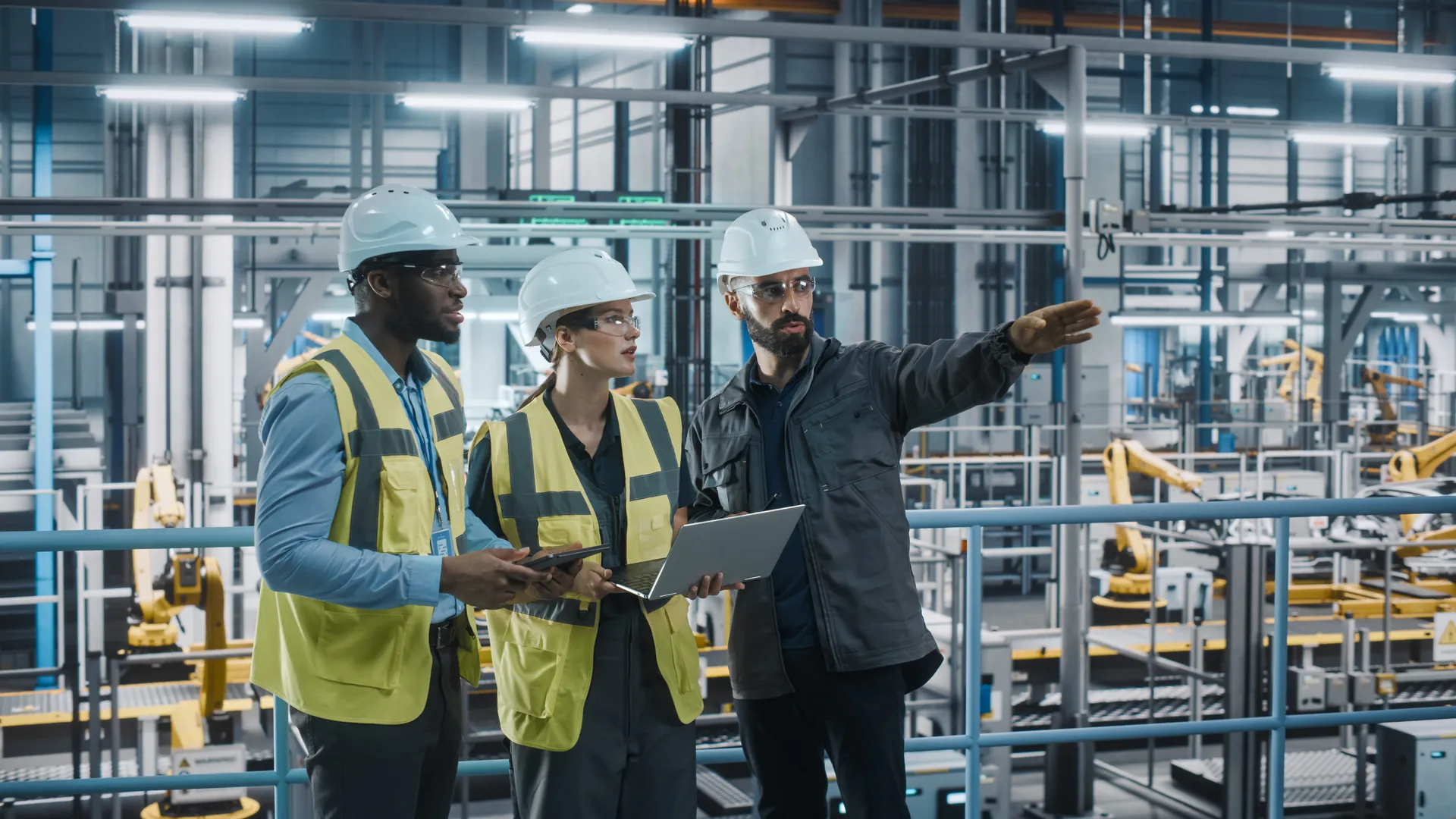
Young Diverse Team of Car Factory Specialists Working on Laptop and Tablet Computers. Engineers Discussing Automotive Industrial Manufacturing Technology on Modern Vehicle Assembly Plant.

Shape the Future Skills Hub

Your expertise and insights are invaluable. If you have content, resources, or feedback to enhance the Future Skills Hub, we want to hear from you! Let’s collaborate and shape the future of engineering and manufacturing.

Get in touch

circular-pattern-rotation